Introduction

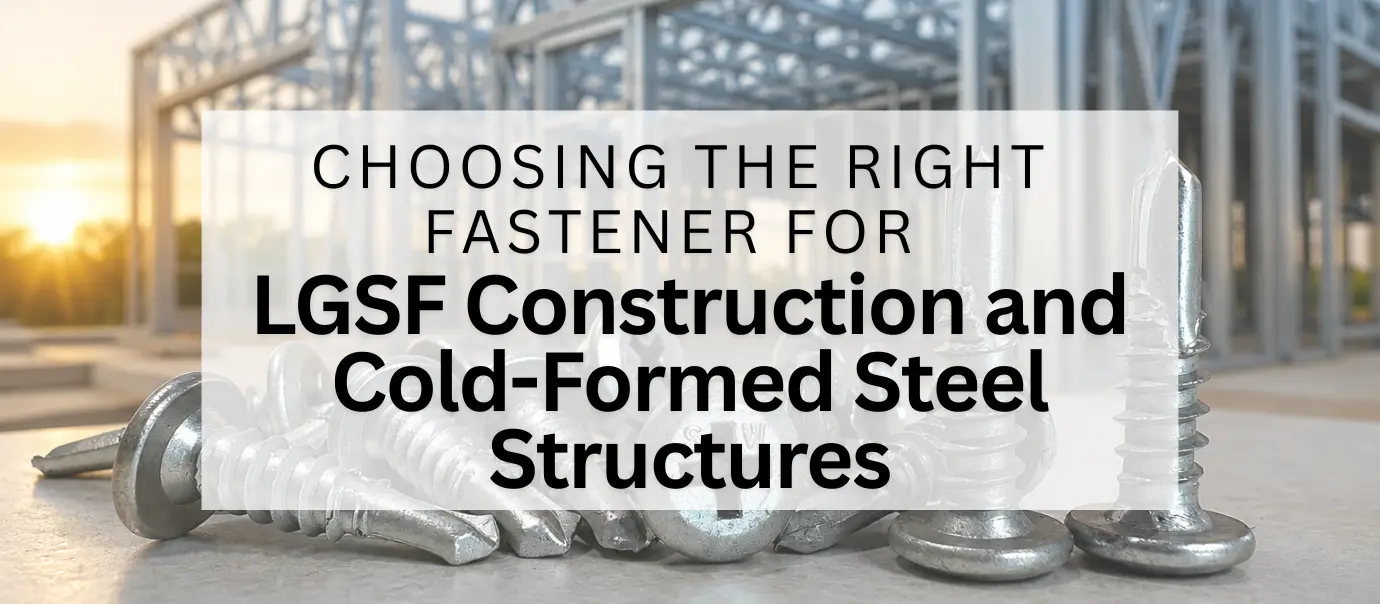
Walk onto any Light Gauge Steel Framing (LGSF) site and you’ll notice something interesting: nobody’s talking about the steel. They’re talking about the self-drilling screws holding it together.

That’s not an accident. In LGSF and Cold-Formed Steel (CFS) construction, the steel sections are really just the skeleton. The frame fixing screws are what turn that skeleton into a structure that can actually carry load, resist wind, and stay standing for the next fifty years. Get the fastener wrong, and even the best steel in the world won’t save you from loose joints, stripped threads, rust stains, and callbacks you didn’t budget for.

Whether you’re building prefabricated homes, modular offices, commercial complexes, or industrial sheds, the fastener you choose is doing more structural work than most people give it credit for. This guide walks through exactly how to pick the right self-drilling screws for LGSF construction — and why this humble component deserves a lot more respect than it usually gets.


Why Fasteners Matter So Much in LGSF Construction

Traditional construction leans on welding, bolting, and a fair amount of wet trade work. LGSF doesn’t. Every wall panel, every roof truss, every floor joist, every single connection in an LGSF building is held together mechanically — by screws.

That changes the stakes considerably. The right fastener gives you:

  • High structural strength at every joint
  • Precise, consistent alignment of steel members
  • Faster installation with fewer stoppages
  • Long-term durability that doesn’t need constant maintenance
  • Resistance to vibration and everyday movement
  • Genuine corrosion protection over the building’s lifespan

Use the wrong screw, or a cheap one, and you get the opposite: joints that loosen with time, threads that strip mid-install, and a structure that’s only as strong as its weakest fastener — which, unfortunately, is usually all of them.


Understanding Cold-Formed Steel Screw Connections

Cold-formed steel starts life as galvanized steel coil, rolled and shaped into the C-sections and channels you see on site. Because these members are thinner than hot-rolled structural steel (as defined in AISI’s North American cold-formed steel framing standards), they can’t be fastened the same way. Drive the wrong screw in, and you risk deforming the section instead of securing it.

This is exactly the problem self-drilling frame fixing screws were engineered to solve. They drill, tap, and fasten thin steel in one clean motion, without warping or weakening the member — which is why they’ve become the standard for CFS work.


What to Look For When Choosing LGSF Fasteners

1. Match the Screw to the Steel Thickness

Not all self-drilling screws are built for the same job. Thinner steel sections work fine with standard self-drilling points, but thicker structural members need screws with a higher drilling capacity: more flutes, a sharper point, more torque tolerance. Always check the screw against the actual gauge of steel you’re joining rather than assuming one size fits all.

2. Pick the Right Head Type for the Application

Wafer head screws are the workhorses of steel-to-steel framing — all studs, roof trusses, partition systems. Their wide bearing surface spreads load evenly, sits flush against the steel, and holds firm under stress.

Countersunk (CSK) screws earn their place wherever a completely flush surface matters: cement boards, floor panels, and finishing boards where a proud screw head would show through or interfere with the next layer.

Hex head screws are built for torque. They show up in roofing, external cladding, and other heavy-duty fixing jobs where you need serious grip during installation.

3. Don’t Underestimate the Self-Drilling Point

This is the feature that makes modern LGSF screws so efficient. No pre-drilling, no second pass, no wasted labor hours. One screw, one operation — drill, tap, fasten — and you get faster installs, cleaner connections, and far more consistent results across a large job than you’d ever get with pre-drilled holes.

4. Take Corrosion Resistance Seriously

An LGSF building is meant to last decades, which means the fasteners holding it together need to outlast a lot of weather. Look for screws with proper protective coatings:

  • Zinc plating for standard protection
  • C3 RustGuard (also known as Xylan coating) for enhanced resistance
  • High-performance corrosion-resistant coatings for harsh or coastal environments

Skimp here, and you’re not just risking rust stains — you’re risking the fastener itself failing years before the structure around it does.

5. Get the Screw Length Right

Too short, and you lose pull-out resistance. Too long, and you get excessive projection, installation problems, and a connection that looks and performs worse than it should. The right length gives you a strong grip through the steel without any of that guesswork.


Common Fasteners Used in LGSF Construction

Frame assembly screws — the connectors that hold wall frames, roof trusses, floor systems, and prefabricated structures together at every joint.
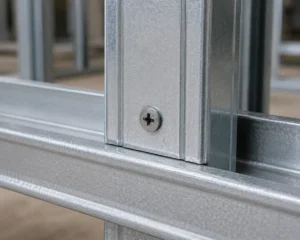
Self-drilling screws — the all-in-one solution for steel-to-steel connections: drill, tap, and fasten in a single pass.
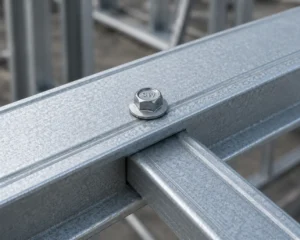
Self-tapping screws — best suited to pre-drilled holes where the threading happens after the hole is already prepared.
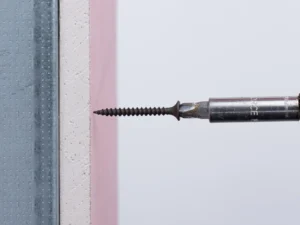
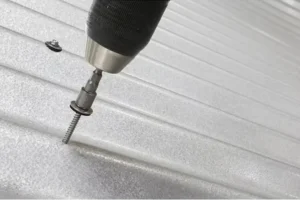
Roofing screws — purpose-built for roofing sheets, sandwich panels, and metal cladding, usually paired with EPDM washers to keep the connection genuinely leak-proof.

Common LGSF Fastener Mistakes to Avoid

Most fastener-related failures on LGSF sites trace back to a handful of avoidable mistakes:

  • Using ordinary wood screws on steel framing (they simply aren’t built for it)
  • Picking the wrong screw length for the application
  • Skipping corrosion protection to save a few rupees per box
  • Sourcing low-quality, unverified imported screws
  • Choosing a drill point that doesn’t match the steel gauge
  • Over-tightening screws during installation, which strips threads and weakens the joint

None of these are complicated to avoid — they just require paying attention at the procurement stage instead of the repair stage.


What You Actually Get From High-Quality Frame Fixing Screws

Investing in premium frame fixing screws isn’t about spending more for the sake of it. It shows up in tangible ways:

  • Faster installation across the whole site
  • Better structural strength at every connection
  • Superior pull-out performance under load
  • Real corrosion resistance over the building’s life
  • Consistent thread quality, screw after screw
  • Lower maintenance costs down the line
  • A longer service life for the structure overall


Where LGSF Fasteners Are Used

Quality frame fixing screws show up across a wide range of builds:
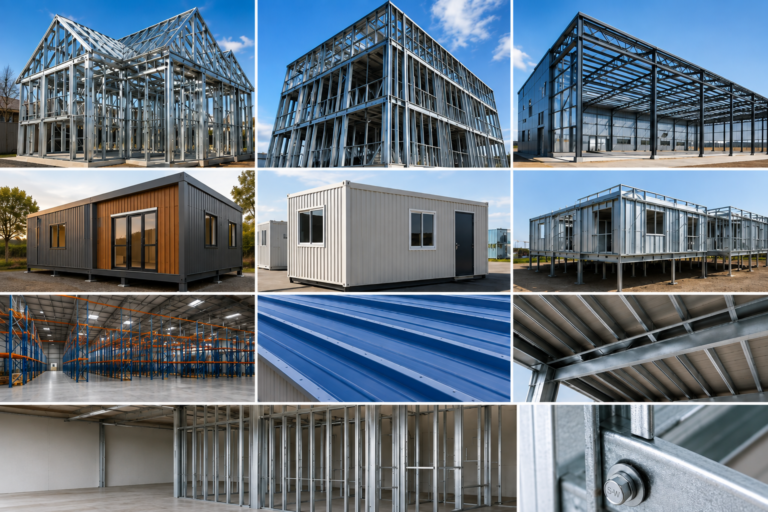
  • Residential LGSF homes
  • Commercial buildings
  • Industrial sheds
  • Modular construction
  • Portable cabins
  • Prefabricated buildings
  • Warehouse structures
  • Roofing systems
  • Ceiling framing
  • Steel partitions


If it’s built with cold-formed steel, chances are the right fastener is doing more work than people realize.


Why Builders Choose Screworks Frame Fixing Screws

At Screworks, fasteners aren’t an afterthought — they’re the whole point. We manufacture high-performance self-drilling screws engineered specifically for modern LGSF and cold-formed steel construction, built around what contractors actually need on site:

  • Precise, reliable drilling performance
  • Consistent thread formation, batch after batch
  • High pull-out strength you can trust under load
  • Excellent corrosion resistance for long-term durability
  • Dependable fastening for steel-to-steel applications
  • Strict quality control on every single batch we produce

From modular homes to industrial structures to large commercial projects, Screworks fasteners are built to perform from the moment they’re installed through years of service afterward.


Frequently Asked Questions

What is the best screw for cold-formed steel framing?

Self-drilling screws are the standard choice for cold-formed steel framing. They drill, tap, and fasten thin steel in a single pass, without the pre-drilling or member deformation that comes with using ordinary screws on light gauge steel.

Can you use wood screws on LGSF steel framing?

No. Wood screws aren’t designed to drill through or tap steel, so they strip, snap, or fail to seat properly on LGSF framing. Self-drilling screws, purpose-built for steel-to-steel connections, are required instead.

What coating should LGSF screws have for coastal or harsh environments?

Standard zinc plating is fine for typical indoor or dry-climate applications, but coastal and high-moisture environments call for enhanced coatings like C3 RustGuard (Xylan) or other high-performance corrosion-resistant finishes rated for the exposure level.

What size self-drilling screw do I need for steel studs?

Screw length should be long enough to fully penetrate both steel members with adequate thread engagement, without excessive projection on the back side. The right length depends on the combined thickness of the steel gauges being joined, so always check the screw manufacturer’s length chart against your specific stud and track gauge.


Conclusion

Every LGSF or cold-formed steel project ultimately rests on one decision that’s easy to overlook: which fastener holds it all together. Steel thickness, head type, drill point, coating, and screw length aren’t just technical checkboxes — they’re the difference between a structure that performs for decades and one that starts giving trouble within a few years.

Choosing high-quality self-drilling screws speeds up your build today and protects its safety and performance for years to come. Get the fastener right, and everything else you’ve built on top of it gets to do its job properly.

Focus Keywords: LGSF fasteners, LGSF screws, frame fixing screws, self-drilling screws, cold-formed steel screws, steel framing screws, fasteners for LGSF construction, LGSF construction screws, cold-formed steel fasteners, Screworks frame fixing screws

Share